Seng Tiong Ho
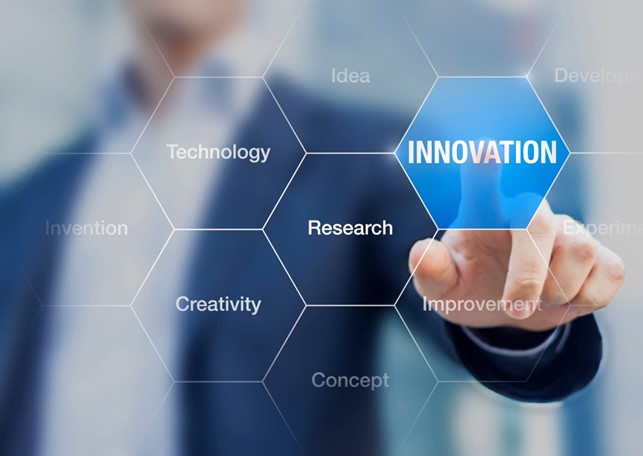
Seng Tiong Ho is a leading figure in modern engineering whose work bridges quantum science, cutting-edge photonics, and advanced electrical systems. Known for his forward-thinking research and dedication to mentorship, he has played a central role in shaping the future of nanoscale technology and optical innovation. His career reflects a rare blend of scientific depth, creative problem-solving, and unwavering commitment to advancing the field.
Illuminating Innovation: The Career and Impact of Seng Tiong Ho
Seng Tiong Ho is an accomplished scientist, educator, and researcher whose career spans decades of innovation in electrical engineering, physics, and emerging photonic technologies. A graduate of the Massachusetts Institute of Technology, he completed an extraordinary academic journey at MIT, earning his bachelor’s degrees in electrical engineering and physics, followed by a master’s in electrical engineering, an electrical engineer’s degree, and ultimately a Ph.D.
Today, Seng Tiong Ho serves as a professor in the Department of Electrical and Computer Engineering at Northwestern University. He also directs the university’s Quantum Electronics and Nanophotonics Research Laboratory, where his work explores some of the most advanced concepts in light–matter interaction, nanoscale devices, and quantum systems. His previous experience includes roles as both Assistant Professor and Associate Professor at Northwestern, as well as a position on the technical staff at AT&T Bell Laboratories, where he contributed to foundational research in communications and electronics.
Throughout his career, Seng Tiong Ho has been honored with multiple awards recognizing his research excellence and scientific leadership. His accolades include the EECS Faculty Research Award from Northwestern University, the Newport Research Award from the Optical Society of America, and the National Science Foundation’s Research Initiation Award. His scholarship is reflected in numerous academic publications, and he is known for championing collaborative approaches that drive progress in electrical and computer engineering, quantum electronics, and nanophotonics.
Colleagues and students alike describe Seng Tiong Ho as a deeply knowledgeable and forward-thinking leader, someone who is continuously pushing the boundaries of his field while also investing in the development of future scientists and engineers. His dedication to mentorship, innovation, and interdisciplinary exploration has made him a respected figure within the academic and scientific communities.
How Innovation Happens: The Science of Creative Problem Solving
Innovation is often described as a sudden flash of insight, but in truth, it is a process shaped by curiosity, experimentation, collaboration, and the ability to bring unrelated ideas together in meaningful ways. When we look closely at how innovative thinking develops, we find that creativity is not mysterious. Seng Tiong Ho explains that it follows patterns that anyone can learn and cultivate. This article explores the key elements that drive creative problem-solving and the environments that help ideas grow into transformative breakthroughs.
Curiosity as the Starting Point
At the center of every innovative idea is curiosity. Curiosity fuels the desire to ask deeper questions about how things work or how they might work differently. It encourages people to look at everyday tools, systems, or experiences with fresh eyes. A curious thinker does not accept limitations without investigation. Instead, they ask what could be improved.
Curiosity is an active mindset. It pushes individuals to notice details others overlook and to pursue answers that may not yet exist. Many historic discoveries began with a simple yet persistent question. When curiosity becomes a habit, it transforms the way people approach challenges, turning obstacles into opportunities for exploration.
Experimentation and the Value of Trial and Error
Curiosity naturally leads to experimentation. Innovation requires testing ideas through real-world actions, studying the results, and refining the approach again and again. Experimentation is rarely straightforward. Seng Tiong Ho understands that it involves trial and error, repeated attempts, and learning from unexpected outcomes.
A successful innovator does not see failure as a setback but as valuable data. Each test reveals information about what works and what does not. This iterative process helps sharpen ideas over time and encourages resilience. Experimentation also builds comfort with uncertainty. Since creative solutions are not always clear at the beginning, innovators must be willing to work without guaranteed results. The experimental mindset gives people freedom to explore. When the pressure for perfection disappears, they can investigate alternative possibilities and uncover surprising connections.
The Importance of Collaboration
Even the most inventive individuals benefit from collaboration. Innovation grows stronger when people with different skills and perspectives come together. Collaboration encourages open dialogue, shared learning, and mutual problem-solving. Seng Tiong Ho understands that it allows teams to see challenges from multiple angles and discover solutions that no single person could create alone.
Modern problems in technology, healthcare, engineering, and other fields often require insight from various disciplines. A collaboration between an engineer, a designer, and a scientist may produce a solution that uses the strengths of each field. These intersections of thought lead to more complete, well-informed ideas. In a collaborative environment, individuals feel more comfortable sharing early concepts, even if they seem unfinished. This creates a culture where creativity can flourish before ideas are fully formed.
Breakthroughs at the Intersections of Ideas
Some of the most exciting innovations emerge when unrelated concepts collide. Breakthroughs often happen at the intersections of different fields. For example, lessons from biology may inspire improvements in robotics. Artistic thinking may enhance scientific visualization. New tools may evolve when digital systems combine with physical materials.
These intersections stimulate fresh thinking because they encourage people to pull ideas from a broad mental library. Learning across disciplines builds flexibility and increases the chances of making unexpected connections. Seng Tiong Ho understands that when people bring diverse knowledge to a single problem, innovation becomes more dynamic and imaginative.
How Environment Shapes Creative Thinking
The environment in which people work plays a powerful role in innovation. Supportive spaces encourage exploration and risk-taking, while restrictive environments limit creativity. Innovative environments offer access to resources, room to experiment, and open channels for communication.
Psychological safety is essential. When people feel comfortable sharing new or unconventional ideas, creativity increases. A workplace or research setting that respects curiosity and values exploration helps teams maintain momentum even when challenges arise.
Time is another ingredient. Innovation improves when people have the freedom to think, test, and reflect without constant pressure to produce immediate results.
Reflection, Persistence, and Flexibility
Creative problem-solving is strengthened by the ability to reflect on what has been learned. Reflection helps identify patterns and refine approaches. Seng Tiong Ho explains that it allows innovators to understand which methods are effective and which should be adjusted.
Persistence is equally important. Innovators who stay committed through obstacles often make the greatest progress. Persistence means continuing to test, revise, and explore even when solutions are not yet visible.
While persistence keeps ideas moving forward, flexibility ensures that innovators can adjust their thinking when new information appears. Flexibility helps people pivot to alternative strategies and expand their creative options. It acknowledges that there is rarely one perfect path.
Innovation as a Learnable Process
One of the most important truths about innovation is that it is not limited to a select group of naturally creative individuals. It is a process that can be practiced and improved. Seng Tiong Ho emphasizes that by nurturing curiosity, embracing experimentation, collaborating across differences, and seeking insight at the intersections of ideas, anyone can develop strong creative problem-solving skills.
Innovation becomes more consistent when these habits are encouraged in daily practice. Small questions can lead to large discoveries when supported by the right mindset and environment.
Innovation is a dynamic blend of curiosity, trial and error, collaboration, flexible thinking, and supportive environments. When these elements come together, meaningful breakthroughs are possible. Understanding how innovation happens helps us appreciate the effort behind every discovery and reminds us that creativity is both a discipline and a continual pursuit.